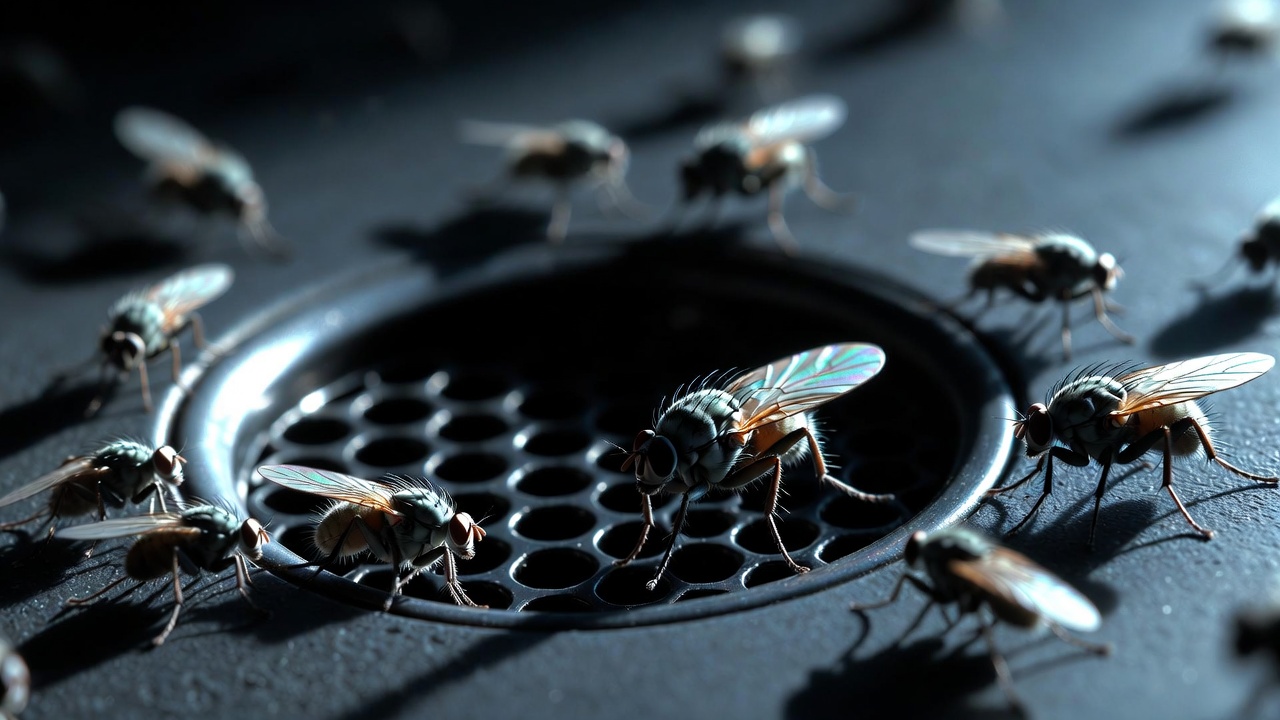
Drain flies breed in the organic film coating the inside of your drain pipes. To eliminate them: pour boiling water down affected drains daily for a week, then use an enzyme drain cleaner to digest the biofilm they breed in. For septic-connected drains, monthly bacterial treatment tablets do double duty — eliminating drain fly habitat while protecting your tank.
What Are Drain Flies?
Drain flies — also called moth flies, sewer flies, or filter flies — are tiny insects (1–5mm) with fuzzy, moth-like wings. They're weak fliers and tend to sit on walls near drains rather than swarming around your head like fruit flies. You'll most often spot them in bathrooms, kitchens, and utility rooms.
Despite looking like fruit flies, drain flies are a completely different species. They don't breed in fruit or food — they breed in the organic slime (biofilm) that coats the inside of drain pipes and septic infrastructure. This is a crucial distinction because it means eliminating their food source, not just the adults, is what solves the problem.
How to Tell If You Have Drain Flies
The fastest identification method takes 30 seconds:
- Cut several strips of clear tape
- Place them sticky-side down over your drain openings overnight
- In the morning, check the tape — drain flies stuck to it confirm the source
Other identification signs:
- Small, dark fuzzy flies sitting motionless on walls near drains and toilets
- Flies that flutter lazily when disturbed rather than flying in straight lines
- Infestation concentrated in bathrooms or utility rooms (rarely kitchens)
- Population that grows despite cleaning visible surfaces
Drain flies: fuzzy/moth-like wings, sit on walls, near drains. Fruit flies: clear wings, red eyes, hover around fruit and food. The treatment is completely different — don't waste time treating for fruit flies if you have drain flies.
Where Drain Flies Come From
Drain flies require three things to breed: moisture, organic matter, and slow-moving or still water. Inside your drain pipes, a layer of organic biofilm — made up of bacteria, fungi, grease, hair, soap scum, and food particles — coats the pipe walls. This is their breeding ground.
Common sources in order of frequency:
- Bathroom sink and shower drains — soap scum and hair accumulate rapidly
- Floor drains — especially those rarely used, where stagnant water sits
- Toilet base seals — a failing wax ring creates a gap where organic matter accumulates
- Septic tank vent pipes — flies can breed in the tank and emerge through the roof vent
- Garbage disposal drain — food residue inside the disposal housing
- Sump pump pits — stagnant, organic-rich water is ideal
How to Kill Drain Flies: Step-by-Step
Step 1: Confirm the Source (Tape Test)
Before treating, confirm exactly which drain(s) are infested using the tape test above. Treat all positive drains simultaneously — treating one while ignoring another lets the population migrate and re-establish.
Step 2: Boiling Water Flush
Pour a full kettle of boiling water slowly down each affected drain. Do this twice daily for 5–7 days. The heat kills adult flies, larvae, and eggs on contact and softens the biofilm for the enzyme treatment to follow.
Caution: Don't use boiling water in PVC pipes — it can soften joints over repeated use. Use very hot (not boiling) tap water for PVC drain lines.
Step 3: Enzyme Drain Cleaner
This is the most important step. An enzyme drain cleaner digests the biofilm that drain flies breed in — eliminating the food source and habitat. Pour it down affected drains, let it sit overnight, and repeat for 3–5 consecutive nights.
Unlike chemical drain cleaners (Drano, Liquid-Plumr), enzyme cleaners are:
- Safe for all pipe types including PVC
- Septic-safe — they actually benefit your tank bacteria
- More effective at eliminating biofilm (chemicals kill surface matter; enzymes digest the whole film)
ⓘ Affiliate disclosure: links below may earn us a commission at no extra cost to you. Details →
Step 4: Physical Cleaning
Use a drain brush or pipe snake to physically scrub the inside of drain pipes 6–12 inches down. This dislodges the bulk of the biofilm that enzyme cleaners then digest. For bathroom sinks, removing and cleaning the pop-up stopper often reveals a massive biofilm buildup.
Step 5: Apple Cider Vinegar Trap (for Adults)
While you're treating the source, knock down the adult population with simple traps: fill a small glass with apple cider vinegar, add a drop of dish soap (breaks surface tension), cover with plastic wrap, and poke small holes in the top. Adult flies are attracted to the vinegar and can't escape. Replace every 2 days.
Step 6: Repeat and Monitor
A full drain fly elimination cycle takes 2–3 weeks because larvae continue hatching from eggs already in the pipe. Don't stop treatment after the adults disappear — continue enzyme treatments for at least 2 weeks after you stop seeing flies.
Don't use bleach or chemical drain cleaners on septic-connected drains. They kill your tank's bacterial ecosystem and don't eliminate biofilm as effectively as enzymes. They also don't kill drain fly eggs — only adults on contact.
Drain Flies and Septic Systems
If you're on a septic system and have persistent drain flies, the source may be deeper than household drains. Two septic-specific scenarios:
Flies From the Septic Tank Vent
The vent pipe exiting your roof allows gases — and sometimes drain flies — to escape. If you're seeing flies near the roof line or notice them appearing even after treating all household drains, the tank vent is the likely source. A carbon filter vent cap prevents flies from entering/exiting through the vent while still allowing gas escape.
Biofilm in Drain Lines Leading to the Tank
The main drain line from your house to the septic tank can harbor biofilm in low-flow sections. Monthly septic treatment tablets address this — the bacterial and enzyme payload travels through all drain lines on the way to the tank, digesting biofilm throughout the system.
Septifix tablets include protease, lipase, and cellulase enzymes that digest the organic biofilm drain flies breed in — throughout your drain lines and tank. Monthly use keeps pipe walls clean and prevents biofilm from re-establishing, making it an effective ongoing drain fly prevention tool alongside its primary septic benefits.
Long-Term Prevention
- Run all drains weekly. Drain flies need stagnant water to breed. Flushing unused drains (guest bathrooms, utility sinks, floor drains) weekly removes standing water and prevents biofilm accumulation.
- Pour vegetable oil down rarely-used drains. A tablespoon of oil on top of the water in the trap slows evaporation and creates a barrier drain flies can't penetrate to lay eggs.
- Clean drain stoppers monthly. The pop-up stopper in bathroom sinks collects massive biofilm. Remove and clean it monthly with a brush and hot water.
- Use monthly enzyme treatment tablets. For septic-connected homes, monthly tablets keep enzyme levels high throughout the system, continuously digesting the biofilm that drain flies depend on.
- Fix slow drains immediately. Standing water from slow-draining pipes is prime drain fly habitat. A slow drain is always worth addressing — it's a habitat problem as much as a plumbing problem.
FAQs
Drain flies don't bite and aren't known to transmit disease directly. However, they breed in sewage and carry bacteria on their bodies, which is a hygiene concern if they land on food preparation surfaces. More practically, a drain fly infestation is a sign of significant organic buildup in your pipes — a condition that's worth addressing for your plumbing and septic health regardless of the flies.
With consistent treatment — enzyme cleaner nightly, boiling water flushes twice daily — you'll see a major reduction in adult flies within a week. Complete elimination takes 2–3 weeks because eggs and larvae in the pipe continue hatching. Don't stop treatment when the adults disappear; continue for two full weeks after you stop seeing flies.
Bleach kills adult drain flies on contact but doesn't eliminate biofilm effectively and doesn't reach eggs. It also harms your septic system's bacterial ecosystem. Enzyme cleaners are significantly more effective because they digest the biofilm — the actual breeding ground — rather than just killing surface-level adults.
Yes. Drain flies can breed in the septic tank itself and travel through the vent pipe to the exterior, or back up through drain traps inside the home. If you treat all household drains without success, the tank vent is the next place to investigate. A carbon filter vent cap is the solution for vent-sourced flies.
Usually because the biofilm wasn't fully eliminated, or because you stopped treatment before all eggs had hatched. Return infestations also happen when the original source drain was missed (do the tape test on every drain in the home). Ongoing monthly enzyme treatment is the most reliable way to prevent recurrence.