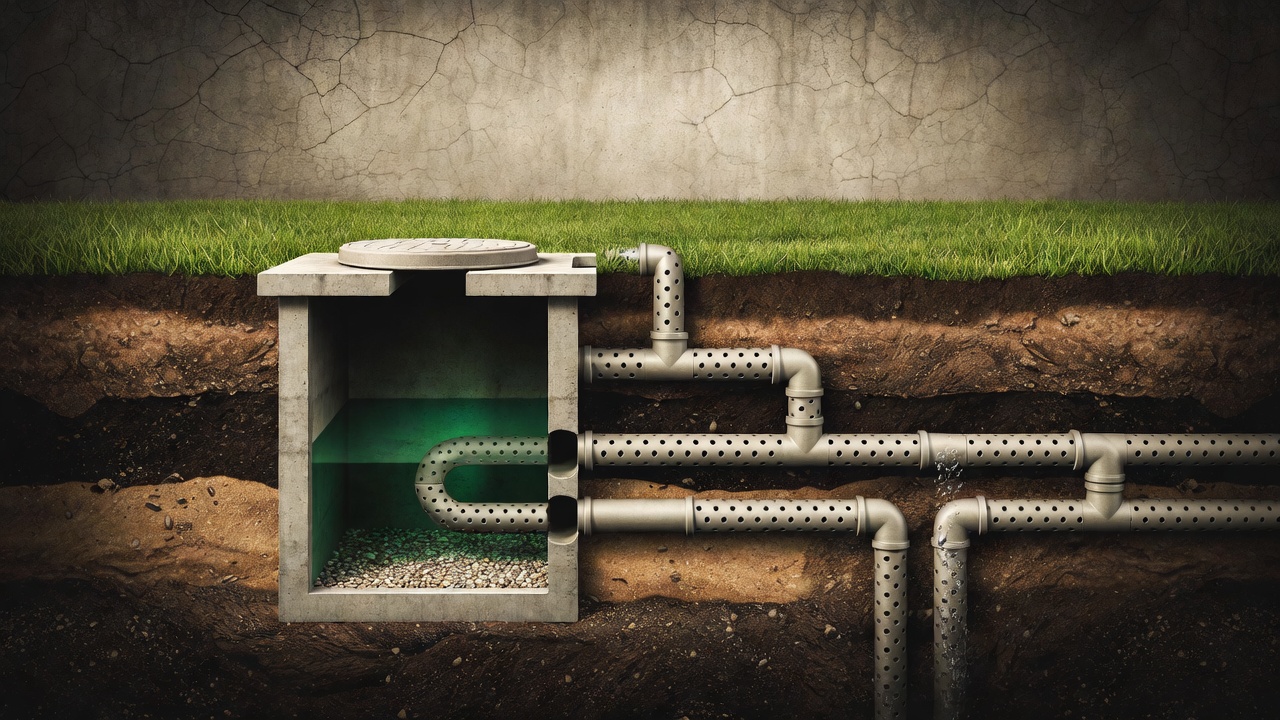
Concrete tanks: 40–50 years. Plastic/fiberglass tanks: 30–40 years. Steel tanks: 20–25 years (now rarely installed). The drain field usually fails first, at 25–30 years with good maintenance — or in under 10 years with poor maintenance. The field is where almost all replacement costs come from.
Septic Tank Lifespan by Material
| Material | Expected Lifespan | Key Risks | Still Installed? |
|---|---|---|---|
| Concrete | 40–50 years | Cracking, root intrusion, corrosion in acidic soil | ✔ Yes — most common |
| Plastic (HDPE/Poly) | 30–40 years | Floating if water table rises, crushing under load | ✔ Yes — increasingly common |
| Fiberglass | 30–40 years | Floating, cracking under soil pressure | ✔ Yes — regional |
| Steel | 20–25 years | Rust and corrosion — fails quickly | ✘ No — banned in most states |
Most tanks installed today are concrete or high-density polyethylene (HDPE). Concrete is heavier and requires professional installation equipment, but it resists floating in high water table conditions and is extremely durable when properly sealed. Plastic tanks are lighter, easier to install, and immune to corrosion — but can shift or float if the water table rises significantly.
The Real Lifespan Question: The Drain Field
Here's what most homeowners don't realize: the tank almost never fails first. The drain field typically reaches the end of its useful life before the tank does — and replacing a drain field costs $5,000–$20,000+, dwarfing the cost of a new tank.
A well-maintained drain field lasts 25–30 years. A poorly maintained one can fail in under 10 years. The difference is almost entirely how the tank above it is managed:
- Tanks that overflow sludge into the field (from infrequent pumping) cause premature field failure
- Harsh chemicals that kill tank bacteria allow solids to pass to the field undigested
- Hydraulic overloading (too much water) saturates the field before treatment is complete
In other words: most drain field failures are preventable. They're the result of neglected tanks sending material into the field that shouldn't be there.
What Shortens Septic System Life
Infrequent Pumping
The single biggest killer. When sludge builds past the outlet level, solids enter the drain field. These cannot be removed — the field must be replaced. Pump every 3–5 years, every 1–2 years with a garbage disposal.
Harsh Chemicals
Bleach, drain cleaners, antibacterial soaps, and solvents kill the bacteria that break down waste. Dead bacteria = faster sludge accumulation = shorter time to field failure.
Driving or Building Over the System
Vehicle traffic compacts drain field soil and crushes pipes. Heavy structures prevent oxygen exchange and root access that maintains field health.
Flushing Non-Biodegradables
Wipes, feminine products, and similar items accumulate in the inlet baffle and tank, eventually passing to the field as non-degradable solids.
Concrete Tank Corrosion
Concrete tanks are vulnerable to corrosion from hydrogen sulfide gas and acidic soil. A well-maintained concrete tank can last 50+ years; a neglected one with a cracked seal may begin deteriorating in 20–25 years. Regular inspection catches this before it becomes catastrophic.
What Extends Septic System Life
Every 3–5 years for most households. This is the single most impactful thing you can do. Non-negotiable.
Maintaining high bacterial activity slows sludge accumulation, reduces drain field loading, and helps the tank perform closer to its designed capacity year-round. This is the most cost-effective ongoing maintenance available.
Spread laundry loads throughout the week. Fix leaking toilets promptly. Don't direct sump pump discharge into the septic system. Hydraulic overloading is one of the top causes of early drain field failure.
A professional can spot early signs of baffle deterioration, inlet pipe issues, or drain field problems before they become catastrophic — and before they trigger expensive emergency repairs.
Keep vehicles, heavy structures, and deep-rooted trees away from the drain field area. The field needs oxygen exchange and healthy soil structure to function for decades.
Signs Your System Is Nearing End of Life
- Wet, saturated ground over the drain field that doesn't resolve after dry periods
- Persistent odors that don't respond to treatment
- Repeated pump-outs within 12 months that don't resolve symptoms
- Crack or corrosion in the concrete tank visible during inspection
- Baffle deterioration — concrete baffles can corrode; a professional can inspect
- The system is 30+ years old and hasn't been regularly maintained
Replacement Costs When the Time Comes
The best investment you can make is the $2–$23/month on treatment tablets to delay this expense for as long as possible. Even if tablets add just 5 extra years to your drain field's life, that's potentially $15,000 in delayed replacement costs.
Monthly tablets are the single most cost-effective long-term investment for any septic system. Septifix's 10 billion CFU formula provides maximum bacterial activity to slow sludge accumulation and protect the drain field from premature failure.
FAQs
A 1,000-gallon tank for a 2-person household might go 7–10 years without overflow problems. A 4-person household in the same tank could see sludge overflow in 3–4 years. The answer depends entirely on household size relative to tank capacity. Don't test the limit — pump on schedule.
High-quality HDPE and fiberglass tanks are rated for 30–40 years by most manufacturers. They're immune to corrosion (unlike concrete) but more susceptible to physical damage from vehicles, root pressure, or high water tables. Properly installed and maintained, they match concrete's lifespan in most soil conditions.
Tanks are replaced when: they develop cracks that compromise structural integrity, baffles deteriorate beyond repair, or the drain field fails and a new system location is required. A tank inspection during your next pump-out will show whether the walls, lid, and baffles are in good condition. Most tanks, if properly maintained, will outlast their owners.
In most conditions, concrete lasts 40–50 years versus 30–40 for plastic. However, concrete is vulnerable to hydrogen sulfide corrosion (common in areas with heavy organic content) and acidic soils. In those conditions, plastic may actually outlast concrete. A local installer can advise on what performs best in your specific soil conditions.
A complete septic system — tank plus drain field — typically lasts 25–40 years. The tank component usually outlasts the drain field significantly. Concrete tanks routinely reach 40–50 years; plastic and fiberglass tanks 30–40 years. The drain field is the limiting factor, averaging 25–30 years with proper maintenance and as little as 8–10 years when neglected.
A septic tank can sit unused for months to years without structural damage — but the bacterial colony will die off. When returning to a long-dormant system, flush a high-CFU treatment tablet first and monitor for slow drains or odors over the first few weeks as the colony re-establishes. Have a professional inspect the baffles and drain field for deterioration before resuming regular use.
A septic tank reaches its working liquid level almost immediately — it's always full of liquid by design. What takes time is the sludge layer building up. For a typical 1,000-gallon tank with a family of four, the sludge layer reaches pumpable levels in about 3–5 years. With consistent monthly treatment tablets, this can extend to 5–7 years.
Rarely in normal conditions. Most tanks are buried below the frost line and the biological activity inside generates modest heat. The inlet and outlet pipes are more vulnerable than the tank itself. Risk factors include: a system not used regularly in winter, shallow pipe runs, and minimal snow cover. If your system has frozen before, pipe insulation and a tank heater blanket are effective preventive measures.