


Installing a new septic system is a significant investment for homeowners. According to Angi, the average cost ranges from $3,615 to $12,408. Several factors contribute to the overall expense, including the type of septic tank and the size of the property.
The cost to install a septic system varies widely based on local regulations and the complexity of the installation. Homeowners must consider these factors when planning their budget.
Key Takeaways
- The average cost of a new septic system installation ranges from $3,615 to $12,408.
- Factors such as the type of septic system, property size, and local regulations influence the total cost.
- Understanding these factors helps homeowners make informed decisions.
- Septic tank cost is a significant component of the overall expense.
- Drain field cost also contributes to the total installation cost.
Understanding Septic Systems: The Basics
A septic system is a self-contained, underground wastewater treatment and disposal system. It is a vital component for homes not connected to a municipal sewer system, treating and disposing of wastewater.
What Is a Septic System?
A septic system consists of a septic tank, drain field, and other components that work together to treat wastewater. The septic tank is a watertight container that holds wastewater long enough to allow solids to settle and oil and grease to float to the surface.
How Septic Systems Work
Septic systems work by allowing wastewater to flow from the house into the septic tank, where it is separated into three layers. The treated wastewater then flows into the drain field, where it is filtered through the soil.
Components of a Standard Septic System
The main components include the septic tank, drain field, and sometimes additional features like pumps or alarms. Proper maintenance of these components is crucial for the system’s longevity and effectiveness.
“A well-designed septic system is essential for protecting public health and the environment.”
Average Septic System Cost to Install: Overview
The cost of installing a septic system can vary significantly based on several factors.
The national average cost for septic system installation ranges from $3,000 to $25,000. This wide range is due to various factors, including the type of septic system, property size, soil conditions, and local regulations.
National Average Installation Costs
The average installation cost falls within the range of $3,000 to $25,000. This range encompasses various system types and sizes.
Cost Range by System Type
Different types of septic systems have distinct cost ranges. Understanding these differences is crucial for estimating the total cost.
| System Type | Cost Range |
|---|---|
| Conventional Gravity Systems | $3,000-$8,000 |
| Pressure Distribution Systems | $7,000-$10,000 |
| Mound Systems | $10,000-$20,000 |
What’s Included in Basic Installation Costs
Basic installation costs include labor, materials, and equipment. Understanding these components is essential for budgeting.
Labor Costs
Labor costs are a significant portion of the total installation cost, often ranging from $1,000 to $5,000.
Materials
Materials, including the septic tank and drainfield components, can cost between $1,500 to $10,000.
Equipment
Equipment rental fees, such as for excavators, can add $500 to $2,000 to the total cost.
Types of Septic Systems and Their Costs
Understanding the various septic system types is crucial for estimating installation costs. Different types of septic systems are designed to cater to diverse needs and budgets, making it essential to explore the available options.
Conventional Gravity Systems
Conventional gravity systems are among the most common types of septic systems. They are relatively simple in design and function, relying on gravity to move wastewater from the house to the septic tank and then to the drainfield. The cost for conventional gravity systems ranges from $3,000 to $8,000.
Pressure Distribution Systems
Pressure distribution systems are used when the drainfield is located at a higher elevation than the septic tank or when the soil has poor percolation characteristics. These systems use a pump to distribute effluent under pressure to the drainfield. The cost for pressure distribution systems ranges from $7,000 to $10,000.
Mound Systems
Mound systems are used when the soil has poor percolation characteristics or when the water table is high. They involve constructing a raised bed (mound) of soil that is suitable for treating wastewater. The cost for mound systems ranges from $10,000 to $20,000.
Aerobic Treatment Units
Aerobic treatment units (ATUs) are complex systems that use oxygen to treat wastewater. They are typically used in areas with poor soil conditions or where a higher level of treatment is required. The cost for ATUs ranges from $10,000 to $20,000.
Sand Filter Systems
Sand filter systems use a bed of sand to treat wastewater before it reaches the drainfield. They are often used in areas with poor soil conditions. The cost for sand filter systems ranges from $7,000 to $18,000.
Chamber Systems
Chamber systems are an alternative to traditional drainfield systems, using chambers instead of pipes to distribute effluent. They are more environmentally friendly and can be more cost-effective in the long run. The cost for chamber systems ranges from $5,000 to $12,000.
| Type of Septic System | Cost Range |
|---|---|
| Conventional Gravity Systems | $3,000 – $8,000 |
| Pressure Distribution Systems | $7,000 – $10,000 |
| Mound Systems | $10,000 – $20,000 |
| Aerobic Treatment Units | $10,000 – $20,000 |
| Sand Filter Systems | $7,000 – $18,000 |
| Chamber Systems | $5,000 – $12,000 |
Key Factors Affecting Septic System Installation Costs
Several key elements affect the overall cost of septic system installation. Understanding these factors is crucial for homeowners to budget accurately for their septic system.
Property Size and Layout
The size and layout of a property significantly influence septic system installation costs. Larger properties may require more extensive drainfields, increasing the overall cost.
For instance, a larger property might need additional piping and more labor, adding to the expense. The layout, including the presence of obstacles like trees or slopes, can also complicate the installation process.
Soil Conditions and Percolation Rate
Soil conditions play a critical role in determining the type of septic system suitable for a property. Soil with poor percolation rates may require more complex systems, such as mound or sand filter systems, which are more expensive.
A percolation test, or “perc test,” is often necessary to assess soil conditions. The cost of this test can range from $100 to $400.
| Soil Type | Percolation Rate | System Type | Cost Range |
|---|---|---|---|
| Clay | Slow | Mound or Sand Filter | $10,000-$20,000 |
| Sandy | Fast | Conventional | $3,000-$8,000 |
Local Climate Considerations
Local climate conditions can affect the design and installation of septic systems. Areas with high water tables or frequent flooding may require elevated or specially designed systems.
“Climate considerations are vital in ensuring the longevity and effectiveness of a septic system.” – Septic System Expert
Accessibility Issues
The accessibility of the installation site can impact labor costs. Difficult-to-reach areas may require specialized equipment, increasing the overall expense.
Local Regulations and Requirements
Compliance with local regulations and obtaining necessary permits can add to the cost. These regulations vary by jurisdiction and may include specific requirements for system design, installation, and inspection.
For example, some areas may require more frequent inspections or have specific standards for septic system components.
Septic Tank Costs by Size and Material
Understanding the costs associated with different septic tank materials and sizes is essential for homeowners planning to install a septic system. The cost of a septic tank is influenced by its material and size, with various options available to suit different household needs.
Concrete Tanks
Concrete tanks are a popular choice due to their durability and long lifespan. The cost of concrete tanks ranges from $700 to $2,000.
Durability and Lifespan
Concrete tanks are known for their strength and can last for several decades when properly maintained. Their durability makes them a cost-effective option in the long run.
Size Options
Concrete tanks are available in various sizes to accommodate different household needs. Common sizes include 750, 1,000, and 1,250 gallons.
Plastic/Polyethylene Tanks
Plastic or polyethylene tanks offer a more affordable option, with costs ranging from $500 to $1,800. They are lightweight and resistant to corrosion.
Fiberglass Tanks
Fiberglass tanks are another durable option, with costs between $1,200 and $2,000. They are known for their resistance to corrosion and can last for many years.
Steel Tanks
Steel tanks are less commonly used due to their susceptibility to corrosion, but they can still be an option, costing between $900 and $1,500.
Tank Size Considerations for Different Households
The size of the septic tank needed depends on the number of bedrooms in the house and the daily water usage. Larger households require larger tanks to handle the increased wastewater.
When choosing a septic tank, it’s crucial to consider both the material and size to ensure the system meets the household’s needs and complies with local regulations.
Drainfield Installation Costs
Understanding the costs associated with drainfield installation is essential for homeowners planning to install a septic system. The drainfield, also known as the leach field, is a critical component of a septic system where treated wastewater is discharged into the soil.
Traditional Drainfield Expenses
The cost of traditional drainfield systems can range from $2,000 to $10,000. This wide range is due to various factors including the size of the drainfield, soil conditions, and local labor costs.
| System Size | Cost Range |
|---|---|
| Small | $2,000 – $4,000 |
| Medium | $4,000 – $7,000 |
| Large | $7,000 – $10,000 |
Alternative Drainfield Systems
Alternative drainfield systems, such as mound systems or sand filter systems, can offer solutions for areas with challenging soil conditions. These systems can be more expensive, with costs ranging from $5,000 to $15,000 or more, depending on the complexity and materials used.
Factors Affecting Drainfield Costs
Several factors influence the cost of drainfield installation, including:
Size Requirements
The size of the drainfield required is directly related to the number of bedrooms in the house and the soil’s percolation rate. Larger drainfields cost more to install.
Soil Conditions
Soil conditions play a crucial role in determining the type of drainfield system that can be installed. Soils with poor percolation rates may require more complex and expensive systems.
Materials Used
The materials used for the drainfield, such as gravel, pipes, and distribution boxes, vary in cost. High-quality materials may increase the initial cost but can provide long-term savings through reduced maintenance.
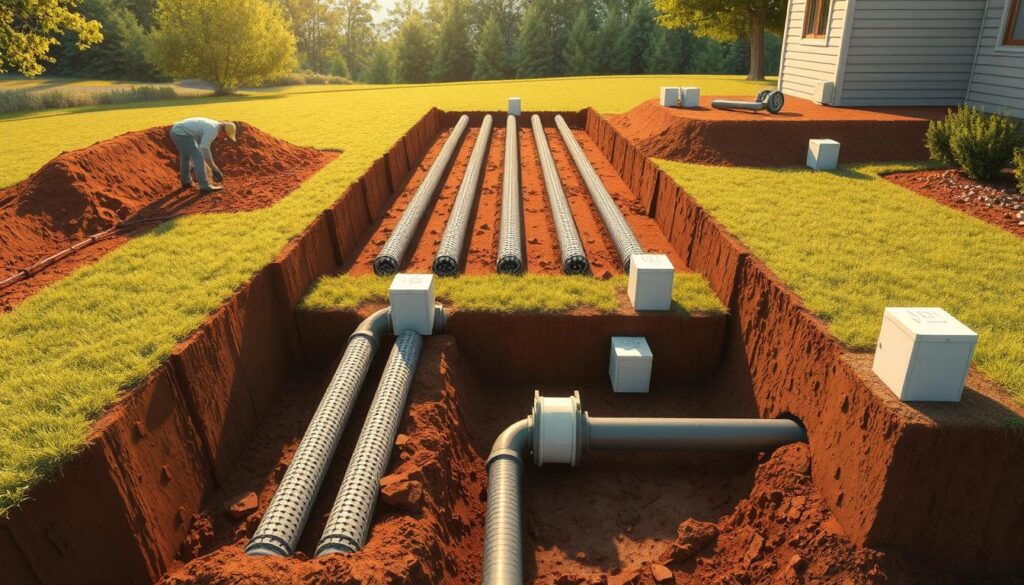
By understanding these factors and considering both traditional and alternative drainfield systems, homeowners can better estimate the total cost of their septic system installation.
Permit and Inspection Expenses
The total cost of installing a septic system includes several ancillary expenses, notably permit and inspection fees. Homeowners must navigate various regulatory requirements, each associated with its own costs.
Required Permits
Obtaining the necessary permits is a critical step in the septic system installation process. Permit costs can vary significantly by jurisdiction, typically ranging from $250 to $1,000.
Soil Testing Fees
Soil testing is essential to determine the suitability of the soil for a septic system. These tests can cost between $100 and $400, depending on the complexity and number of tests required.
Inspection Costs
Inspections are crucial to ensure that the septic system is installed correctly and complies with local regulations. Inspection costs generally fall between $200 and $500.
Engineering and Design Fees
Engineering and design services are often necessary to create a compliant and functional septic system. These professional services can cost between $1,000 and $2,500, depending on the complexity of the system and the site conditions.
| Expense Category | Typical Cost Range |
|---|---|
| Required Permits | $250 – $1,000 |
| Soil Testing Fees | $100 – $400 |
| Inspection Costs | $200 – $500 |
| Engineering and Design Fees | $1,000 – $2,500 |
Understanding these additional expenses is vital for homeowners to accurately budget for their septic system installation. By considering these costs upfront, homeowners can avoid unexpected financial burdens down the line.
Site Preparation and Additional Costs
Site preparation is a crucial phase in septic system installation, encompassing various expenses that homeowners should be aware of. Proper site preparation ensures the longevity and efficiency of the septic system.
Excavation Expenses
Excavation is one of the primary costs associated with site preparation. The cost can vary widely depending on the complexity of the terrain and the size of the septic system. Excavation expenses typically range from $1,500 to $4,000.
Tree Removal if Necessary
If the septic system installation site is heavily wooded, tree removal may be necessary. The cost of removing trees can vary based on the number and size of the trees. Tree removal costs can range from $400 to $1,200.
Water and Electrical Connections
Depending on the type of septic system installed, water and electrical connections may be required. These connections can add to the overall cost. The cost for these connections typically ranges from $500 to $1,500.
Landscaping Restoration
After the septic system is installed, landscaping restoration is often necessary to return the property to its original state. This can include reseeding or resodding the area, replacing plants, and other landscaping work. Landscaping restoration costs can range from $500 to $2,000.
| Site Preparation Task | Cost Range |
|---|---|
| Excavation Expenses | $1,500 – $4,000 |
| Tree Removal | $400 – $1,200 |
| Water and Electrical Connections | $500 – $1,500 |
| Landscaping Restoration | $500 – $2,000 |
Financing Your Septic System Installation
Homeowners can explore multiple financing avenues to cover the expenses of septic system installations. Various options are available to help manage the upfront costs associated with septic systems.
Home Improvement Loans
Home improvement loans are a common financing option for septic system installations. These loans are specifically designed for home renovations and improvements, including septic system upgrades or replacements.
Government Assistance Programs
Government assistance programs can provide financial aid to homeowners, especially in areas with specific environmental concerns. These programs may offer grants, low-interest loans, or other forms of assistance.
Manufacturer Financing Options
Some septic system manufacturers offer financing options or packages that include installation costs. These programs can help spread the cost over time, making it more manageable for homeowners.
Tax Benefits and Incentives
Homeowners may be eligible for tax benefits or incentives for installing septic systems that meet certain environmental standards. These incentives can help offset some of the installation costs.
| Financing Option | Description | Potential Benefits |
|---|---|---|
| Home Improvement Loans | Loans specifically for home renovations | Flexible repayment terms, competitive interest rates |
| Government Assistance Programs | Grants or low-interest loans for eligible homeowners | Financial aid, potentially forgivable loans |
| Manufacturer Financing | Financing packages offered by septic system manufacturers | Convenience, potentially lower upfront costs |
| Tax Benefits and Incentives | Tax credits or deductions for environmentally friendly septic systems | Reduced tax liability, offset installation costs |

Septic System vs. Sewer Connection: Cost Comparison
When considering wastewater management for a property, homeowners often weigh the costs of installing a septic system against connecting to a municipal sewer. This comparison is crucial for determining the most cost-effective solution.
Initial Installation Expenses
The initial cost of installing a septic system can range from $3,000 to $25,000, depending on the type and complexity of the system. In contrast, connecting to a municipal sewer can cost between $500 and $5,000, but may also involve additional fees for tapping into the sewer main.
Long-term Maintenance Costs
Septic systems require regular maintenance, including pumping every 3-5 years, which can cost $200-$500 per pumping. Sewer connections, on the other hand, typically involve monthly or annual fees that can range from $50 to $200 per month.
Monthly/Annual Fee Differences
Homeowners with septic systems may face higher upfront costs but lower ongoing fees compared to those connected to municipal sewers, who pay regular service charges.
Property Value Considerations
The choice between a septic system and a sewer connection can also impact property value. A well-maintained septic system can be seen as a valuable asset, while connection to a municipal sewer may be viewed as a convenience.
Regional Cost Variations Across the United States
Regional factors play a crucial role in determining septic system installation costs nationwide. The cost of installing a septic system can vary significantly across different regions due to factors such as soil conditions, local regulations, and labor costs.
Northeast Region Costs
The Northeast region, known for its dense population and older homes, often faces higher septic system installation costs. The average cost in this region ranges from $8,000 to $15,000, largely due to the complex soil conditions and stringent environmental regulations.
Southeast Region Costs
In contrast, the Southeast region tends to have lower installation costs, averaging between $6,000 and $12,000. The warmer climate and generally more favorable soil conditions contribute to these lower costs.
Midwest Region Costs
The Midwest region experiences a wide range of costs, from $5,000 to $15,000, influenced by factors such as soil type and local health department requirements. Areas with more clay-heavy soils may incur higher costs due to the need for additional soil preparation.
Western States Costs
The Western states exhibit a broad cost spectrum, with averages ranging from $7,000 to $18,000. High labor costs in some areas, combined with environmental regulations, contribute to the higher end of this range.
Rural vs. Urban Installation Differences
A significant factor affecting septic system costs is whether the installation is in a rural or urban area. Rural areas often have lower labor costs but may require longer pipe runs or more complex drainfield designs, potentially increasing costs. Urban areas, while having higher labor costs, may have more straightforward access but face challenges like limited space and stricter regulations.
| Region | Average Cost Range | Influencing Factors |
|---|---|---|
| Northeast | $8,000 – $15,000 | Complex soil conditions, stringent regulations |
| Southeast | $6,000 – $12,000 | Warmer climate, favorable soil conditions |
| Midwest | $5,000 – $15,000 | Soil type, local health department requirements |
| Western States | $7,000 – $18,000 | High labor costs, environmental regulations |
Conclusion
The total cost of septic system installation is influenced by multiple factors, including the type of system, property size, and local regulations. Homeowners must consider these elements to determine the overall septic system cost to install.
When evaluating total cost considerations, it’s essential to factor in not only the initial installation expenses but also long-term maintenance costs, permit fees, and potential repairs. A comprehensive understanding of these costs enables homeowners to make informed decisions about their septic system installation.
By considering the various factors that impact septic system costs, homeowners can better navigate the installation process and ensure a successful outcome. Careful planning and budgeting are crucial to avoiding unexpected expenses and ensuring the system’s longevity.
Frequently Asked Questions
How much is a new septic system for a 2‑bedroom house?
A new system for a smaller home typically costs between $3,000 and $7,000, depending on soil conditions, tank size, and local installation fees.
Will insurance pay for a new septic system?
Most homeowners insurance policies do not cover septic system replacement unless the damage is sudden and accidental. Routine wear or poor maintenance is usually not covered.
What is the most expensive part of a septic system?
The drainfield or leach field is often the most expensive component due to excavation, materials, and labor. Costs can reach $10,000 or more in complex installations.
What is the life expectancy of a septic tank system?
A well-maintained septic system can last 20 to 40 years, depending on the materials used and how regularly it’s pumped and inspected.